EMDR Therapy in Camberwell, Melbourne
At New Connections Psychology, we offer Eye Movement Desensitisation and Reprocessing (EMDR) therapy to support people who feel “stuck” with painful memories, distressing thoughts, or recurring emotional patterns or feelings. EMDR is a structured, evidence-based approach that helps the brain process difficult experiences so they can lose their emotional charge and feel less overwhelming.

What is EMDR Therapy?
Eye Movement Desensitisation and Reprocessing (EMDR) is an internationally recognised therapy originally developed for trauma. Over time, research has shown it can also be effective for:
Post-traumatic stress (PTSD) and Complex PTSD
Anxiety and panic
Depression
Complicated grief
Low self-worth and negative self-beliefs
Relationship and attachment difficulties
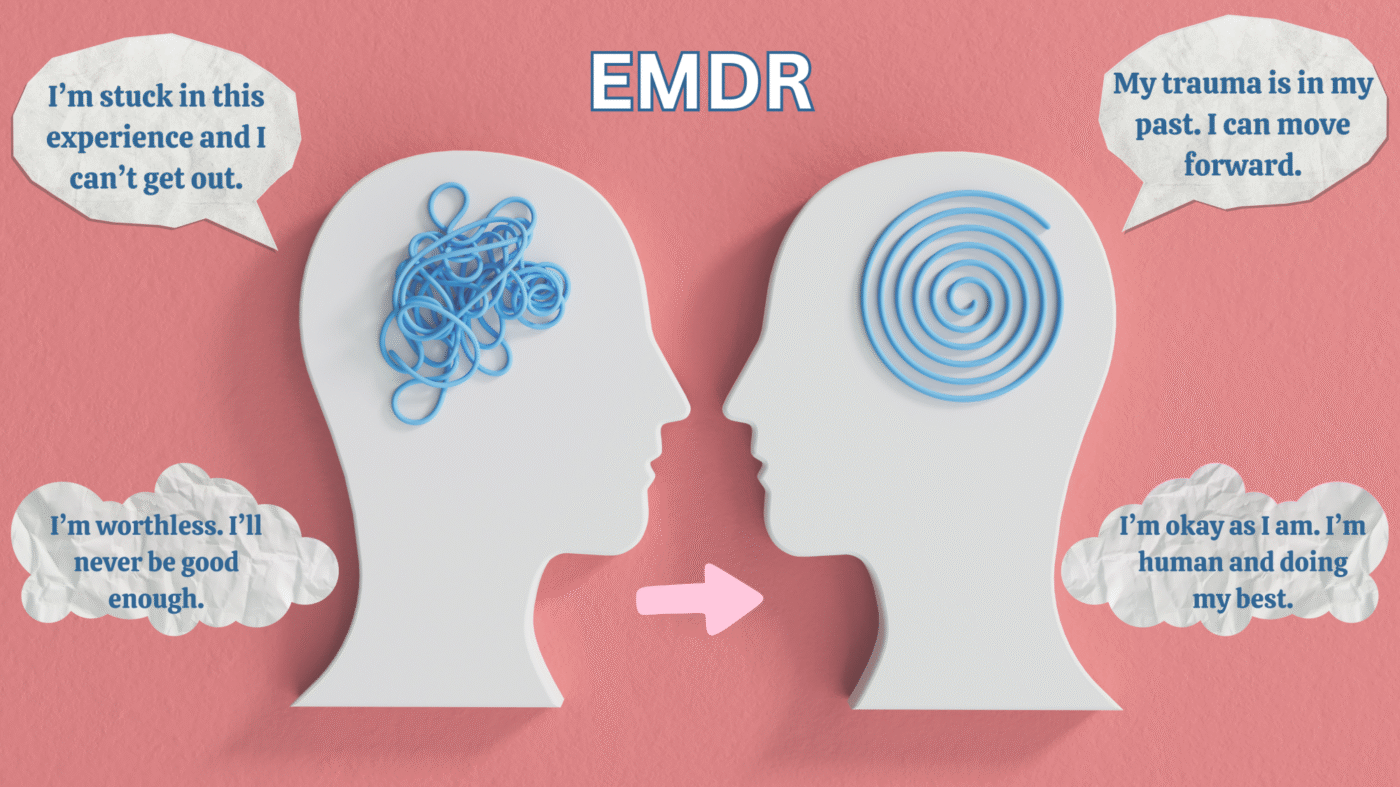
Instead of just talking about memories, EMDR uses bilateral stimulation (such as eye movements or tapping) to help your brain reprocess stuck memories in a safe and supported way. Many clients describe this as a shift from feeling “trapped in the past” to being able to move forward with more freedom and less distress.
How EMDR Can Help
EMDR can be helpful if you notice:
Old memories or feelings keep intruding when you don’t want them to
You feel “numb” or disconnected when strong emotions come up
You avoid situations that remind you of painful events
Negative beliefs like “I’m not good enough” or “I can’t cope” feel hard to shake
Through EMDR, these patterns can be softened, so you can experience less distress, clarity, and a stronger sense of self.
Our Approach
At our Camberwell clinic, EMDR therapy is offered in a safe, supportive space. We take time to prepare you with grounding strategies and emotional regulation tools before starting any memory processing. This ensures that therapy feels steady and manageable, even if your history feels complex.
Our psychologists in Camberwell draw on a range of evidence-based therapies alongside EMDR to best support your needs. We often integrate:
Cognitive Behavioural Therapy (CBT) – for addressing unhelpful thought patterns and beliefs
Emotion-Focused Therapy (EFT) – for deepening emotional awareness and building healthier ways of relating to others
Interpersonal Psychotherapy (IPT) – for strengthening relationships and reducing the impact of interpersonal stress
Supportive Psychotherapy – for encouragement, validation, and guidance through challenging times
This flexible approach means sessions are tailored to your individual needs and pace.